Best-Selling Author & Writer
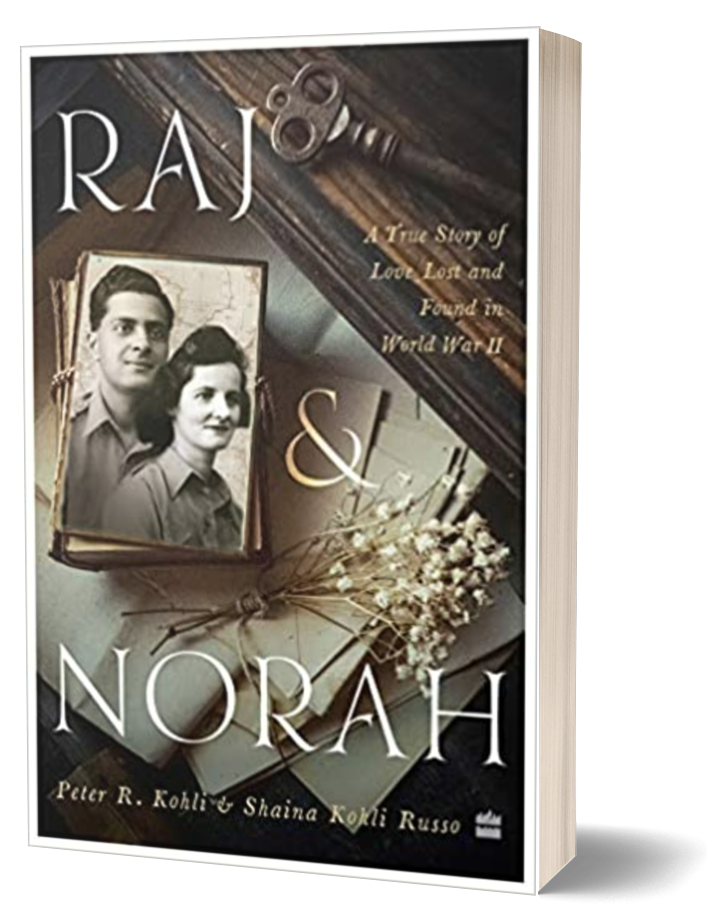
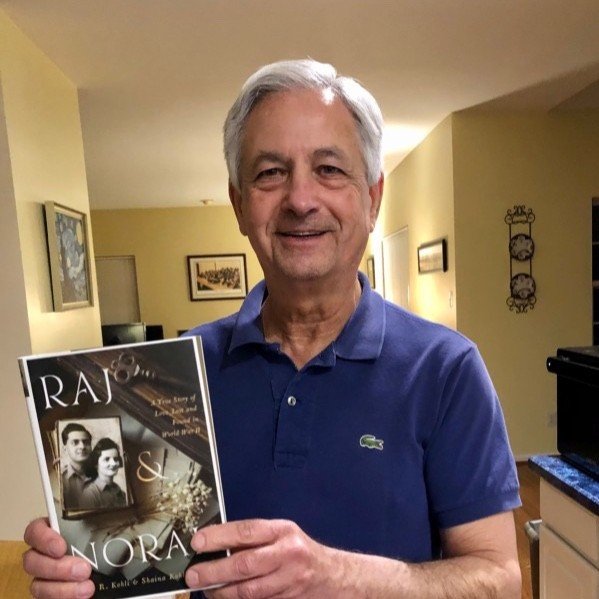
Peter R. Kohli is the author of the best-selling historical novel Raj & Norah
About Peter
Peter R. Kohli, an acclaimed historical fiction author, has captivated readers with his enthralling narratives set against the backdrop of World War Two. His best-selling novel, "Raj and Norah," stands as a testament to his storytelling prowess and meticulous research.
Kohli's evocative prose transports readers to an era of conflict and romance, interweaving the lives of Raj and Norah, two unforgettable characters whose fates are inexorably entwined. With a keen eye for detail and a deep understanding of historical events, Kohli brings the tumultuous era to life, immersing readers in a world where love, courage, and resilience collide amidst the ravages of war.
Most Recent Stories

George, as he did whenever he came home early because business was slow, was standing in the hallway in front of the closed front door. He was waiting for his second youngest daughter to come flying through the door, throwing her book bag on the floor and crashing into her father’s wings. But today was different.
A few minutes after three, George opened his wings to envelope Rosa. However, when the door opened, Rosa walked in slowly looking forlorn, while dragging her bookbag along the ground. Then, just before she reached her father, she slid onto the floor laid on her back and stretched out her wings. George was immediately baffled by her behaviour. He turned to look at Sybil at the other end of the corridor, where she was waiting for Rosa to give her a peck on her way into the kitchen to see what Julia had made for her snack.
Sybil shrugged and grinned. It was the first time Rosa hadn’t rushed into her father’s arms. So, Sybil took it as a win.
“Daddy! Daddy! Daddy!” shouted Rosa as she crashed through the front door of the nest, shedding her book bag along the way and then bumping into her father George, who stood in the hallway to greet his second youngest daughter when she came home from school. “Daddy! Daddy! Daddy!” she shouted again nearly knocking him over. And then after a brief second, during which the entire nest stood anxiously wondering what had gone wrong, Rosa continued. “I know what I want to be when I grow up!”
“A vet and a nurse,” answered George who thought he knew how his daughter’s mind worked. But he was obviously wrong.
“And a rainbow.”
“And a rainbow?” questioned George not quite understanding Rosa.
I will never forget the first time I met Cynthia. It was at the annual dinner dance held by the company I worked for. It was a way for those who owned the business to say that they did something nice at least once a year for the employees, while the employees on the other hand felt it was the only night of the year, where they could get plastered, eat too much, puke their guts up on the marble floors of a high class restaurant where the function was held, and never lose their job. Every other night of the year they had to behave themselves.
Janet is one of those women they write books about.
Growing up in a family of high achievers, she had no alternative but to become a high achiever herself. She really didn’t want to be one, but there was really no viable alternative. Her brothers left home when they were barely in their teens. John left home at 12 to find himself and hasn’t been heard from since. While Richard never did want to find himself, he was very confident as to who he was. But because John left at 12, he knew he had no alternative but to leave as soon as he was 13. The only problem was that he had no place to live and so ended up in the French Foreign Legion, where he did extremely well. Janet’s last brother, Gordon, when he turned 11 brought his family together one cold winter’s evening while a roaring fire was threatening to burn down the house and told his parents and Janet who was still living at home, that he wanted to be a fireman when he grew up.
Mildred Ulrich, Midget’s grandmother, was considered one of the wisest people to ever live. Not only did she knit body armour for her grandson when he became the executive chef of Viking Horde number 12, but she was also known for her prognostications. And thus she acquired the nick name the ‘Oracle of Lapland.’
Even before Midget joined the Viking horde on their very first mission to India, each chieftain of a horde sought an audience with her where they would pose basically the same questions.
“Oh Oracle of Lapland,” they would begin bowing low, throwing money into her tin, which was an old cigarette can that had washed up on the shore of Swedonia, before it was renamed Sweden because the Swedish kept forgetting the name of their country, while Mildred sat crossed legged outside her cave in the scared mountain of Or, depending upon the weather. They would continue with their request once she had counted the money and determined it was enough to pay her rent or groceries for the upcoming week. “Oh Oracle of Lapland. I and my horde will be sailing tomorrow at dawn for who knows where, and before we leave I need to know whether or not I’m going to come back alive and whether where I’m going is a fool’s errand.”
Midget Ulrich, all 6 feet 11 inches of him, a man of someone’s dreams though I have yet to meet someone who believes that, had numerous fetishes. This isn’t something that should come as a surprise to any reader or those who line up outside the kitchen tent for one of the meals he has cooked on one of the Viking hordes’ numerous battles. Needless to say, his fellow compatriots, the ones who take him along on their conquests, don’t care what idiosyncrasies he has, as long as he keeps turning out dishes like pelican stew on high holy days or sweet potato pancakes laced with maple syrup, which they had just been introduced to in Columbusland, or Caviar from Russia.